




Meiyuan Makeup Brush Manufacturer


Introduction
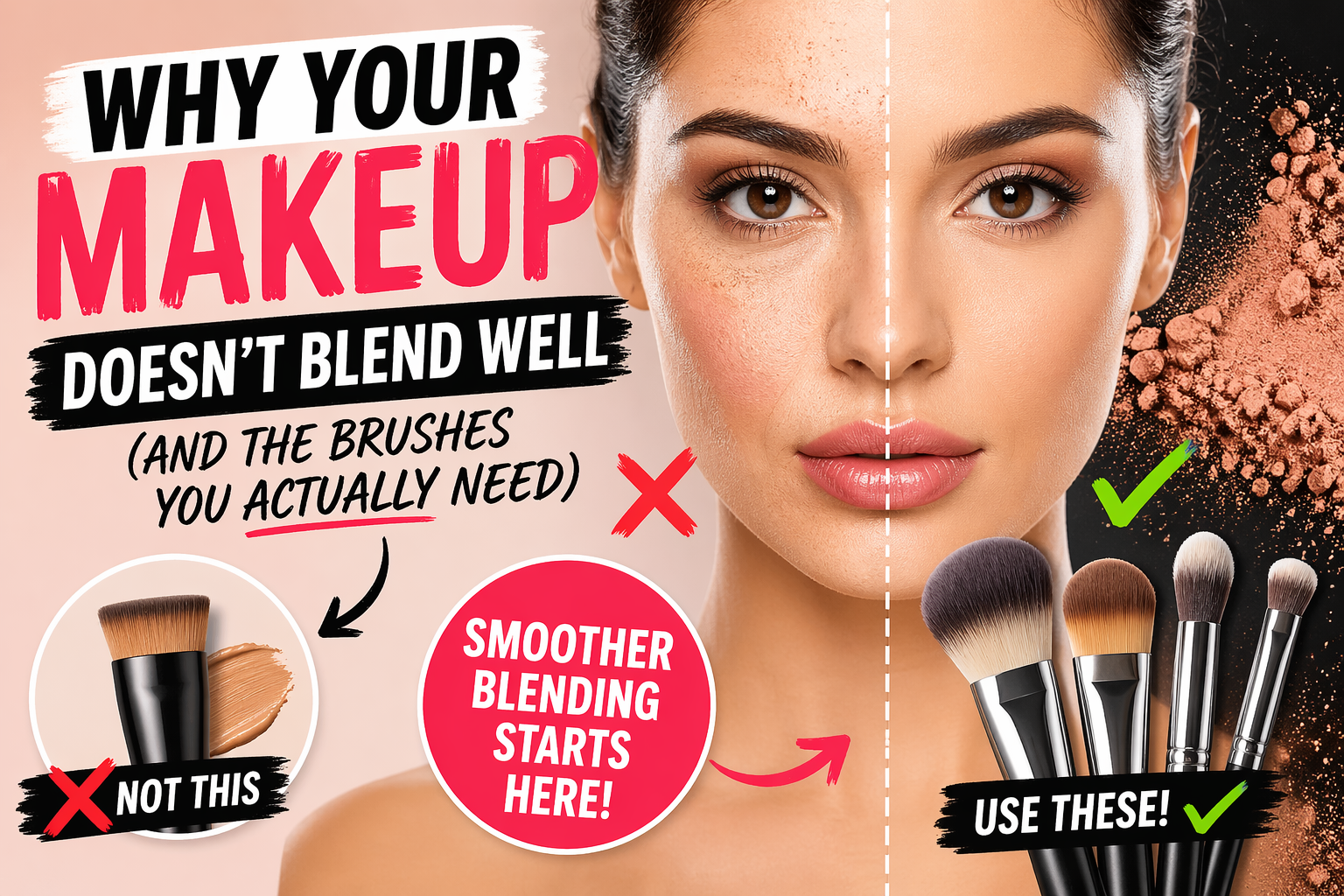
If your makeup often looks patchy, uneven, or difficult to blend, you’re not alone.
Many people assume the problem lies in their makeup products—but in reality, the issue is often much simpler: the wrong tools.
No matter how high-end your foundation or eyeshadow is, poor blending usually comes down to using the wrong brushes—or using the right brushes incorrectly.
In this guide, we’ll break down:
Why your makeup doesn’t blend well
The most common mistakes people make
The exact brushes you actually need
How to fix your blending instantly
1. You’re Using the Wrong Brush Type
Not all brushes are designed for blending.
A very common mistake is using dense or flat brushes for areas that require diffusion and softness.
What happens
Product sits on top of the skin
Edges remain harsh
Blending takes longer (or never looks smooth)
What you actually need
1. Fluffy blending brushes for eyeshadow
2. Loosely packed powder brushes for face blending
3. Rounded foundation brushes for seamless base
Rule of thumb:
The softer and more flexible the brush, the easier the blend
2. Your Brush Is Too Stiff or Low Quality
Brush quality matters more than most people think.
Low-quality brushes often:
Have rough bristles
Don’t distribute product evenly
Drag makeup instead of blending it
Result
Even professional techniques won’t fix a bad brush.
What to look for
Soft, fine bristles
Even brush shape
Good elasticity (brush springs back)
This is why many professional artists prefer handmade brushes, as they tend to offer better control and blending performance.
3. You’re Using Too Much Product
Blending becomes difficult when there’s simply too much product on the skin.
Common signs
Foundation looks thick
Eyeshadow becomes muddy
Blending creates patches instead of smooth transitions
Fix
Use less product
Build in layers
Blend gradually instead of all at once
Even the best brush cannot fix over-application.
4. You’re Not Using the Right Brush for Each Step
Many people try to do everything with one brush.
That’s one of the biggest blending killers.
Minimum brushes you actually need
Instead of 20+ brushes, you only need a functional core set:
Face
Foundation brush (dense but flexible)
Powder brush (soft and fluffy)
Eyes
Blending brush (fluffy)
Packing brush (flat for color placement)
Detail brush (for precision blending)
This small set can already solve 90% of blending issues.
5. Your Brushes Are Dirty
Dirty brushes are one of the most overlooked causes of poor blending.
What happens
Product buildup creates uneven application
Colors mix unintentionally
Brushes lose softness
How often to clean
Foundation brushes: 1–2 times per week
Eyeshadow brushes: every few uses
Clean brushes = smoother blending instantly.
6. You’re Using the Wrong Blending Technique
Even with the right brush, technique still matters.
Common mistakes
Pressing too hard
Rubbing instead of diffusing
Not giving enough time to blend
Better technique
Use light, circular motions
Hold the brush at the end (less pressure)
Let the brush do the work
The Brushes You Actually Need (Simple Version)
If you want a simple upgrade that makes an immediate difference, start here:
1 soft blending brush (eyes)
1 flat shader brush
1 fluffy face brush
1 well-shaped foundation brush
That’s it.
You don’t need dozens of brushes—just the right ones.
Conclusion
If your makeup doesn’t blend well, it’s rarely about your skill level.
In most cases, it comes down to:
Using the wrong brushes
Poor brush quality
Too much product
Lack of proper tools for each step
Fix these, and your makeup will improve immediately.
If you’re building your own beauty brand or looking for better-performing tools, choosing the right brush design makes all the difference.
Explore professional-grade, customizable makeup brushes designed for smooth blending and consistent performance.
The global cosmetics market in 2026 is moving faster than ever. Fu
READ FULLNavigating the cosmetics world in 2026 can feel intimidating for n
READ FULLThe cosmetics market in 2026 is defined by an absolute obsession w
READ FULL