



Meiyuan Makeup Brush Manufacturer


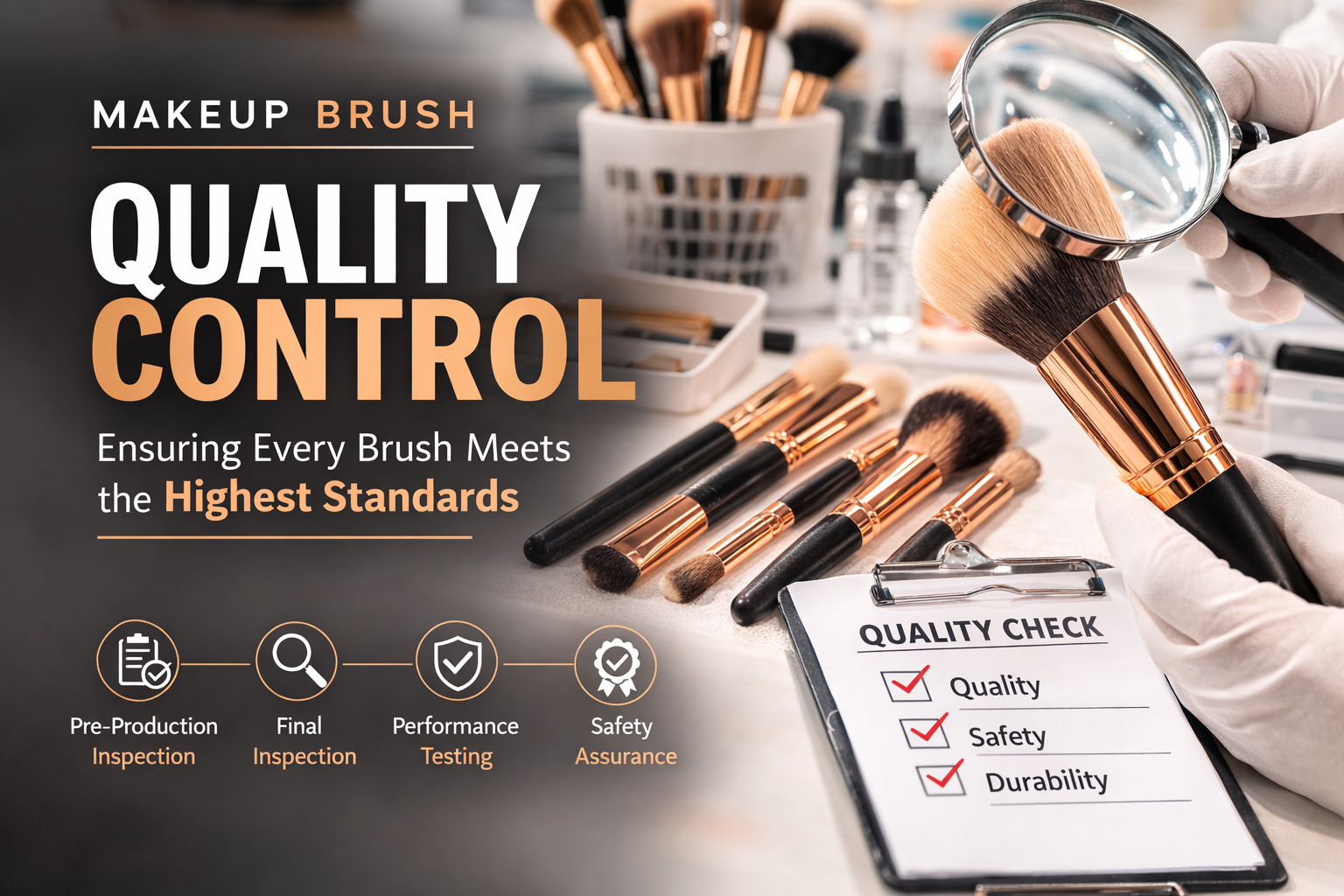
Maintaining high-quality makeup brushes starts long before the first brush is made. From pre-production checks to final inspections and supplier audits, every step ensures your brushes are safe, durable, and professional-grade.
Before creating a single brush, thorough pre-production inspections are essential. This step ensures every component meets your standards.
· Bristle Inspection: Check softness, length, and color. Only use bristles that meet your approved sample.
· Ferrule Inspection: Make sure the metal part is smooth, dent-free, and securely holds the bristles.
· Handle Inspection: Look for cracks, rough spots, or uneven paint.
Assembly Inspection: Ensure all parts fit perfectly. Check glue application for evenness and strength, and test colorfastness by rubbing handles and bristles with a damp cloth. Any defects should be corrected before mass production.
Pro Tip: Always compare new materials to approved samples to maintain consistent professional makeup brush quality.
After production, perform a final inspection on every brush:
· Examine ferrule-handle junction for tightness.
· Inspect handle finish for smooth paint and no chips.
· Check bristle alignment, straightness, and evenness.
· Remove brushes with fingerprints, dust, or glue residue.
· Perform a gentle shake and pull test on bristles to detect shedding.
Repeat this process for every batch to guarantee that only perfect brushes reach your customers. Pre-packaging inspections also ensure brushes are clean, safe, and ready for delivery.
A high-quality brush must perform well and be safe for all skin types.
Performance Tests: - Evaluate bristle pickup and blending efficiency. - Test bristle shedding by gently pulling bristles multiple times.
Safety Tests: - Ensure no harmful chemicals in bristles, ferrule, or handle. - Check for skin irritation risks. - Inspect packaging for cleanliness and damage.
Record Keeping: Maintain detailed inspection records to track quality trends and quickly address issues.
Regular supplier audits are critical to maintaining top-notch makeup brushes. Auditors review: - Factory safety procedures - Worker practices - Material sourcing - Process efficiency
After each audit, receive a report with improvement recommendations to strengthen supplier relationships and maintain high standards.
Independent inspections provide unbiased quality assurance. Third-party services: - Test raw materials, production processes, and finished brushes - Verify compliance with safety and quality standards - Review customer feedback and defect definitions
Inspection Stages: 1. Pre-production inspection: Check incoming materials 2. During production inspection: Sample brushes during assembly 3. Final inspection: Verify finished products and packaging
Third-party validation builds trust with customers and ensures professional-grade makeup brush quality.
Use tools like control charts and Pareto charts to monitor progress. Continuous quality review prevents defects, improves processes, and ensures every brush meets your standards.
Q: How often should brushes be inspected?
A: Inspect at every stage with random sampling for each batch.
Q: Why use third-party inspections?
A: They provide unbiased verification and help demonstrate safety and quality.
Q: How do you test for bristle shedding?
A: Gently shake the brush and pull bristles to ensure durability.
Q: What if you find a defect?
A: Stop production, fix the issue, record it, and review your process to prevent further defects.
By following these steps—pre-production checks, final inspections, performance testing, and supplier audits—you can consistently deliver high-quality makeup brushes that your customers trust.
The global cosmetics market in 2026 is moving faster than ever. Fu
READ FULLNavigating the cosmetics world in 2026 can feel intimidating for n
READ FULLThe cosmetics market in 2026 is defined by an absolute obsession w
READ FULL